
The Human-in-the-Loop Blueprint: AI Without Losing Control

TL;DR: One of the biggest mistakes businesses make with AI is assuming that speed and control are opposites. They are not. Good AI systems are fast because they are controlled. They know when to draft, when to recommend, when to ask, and when to stop. That is what human-in-the-loop design is really about. It is not a delay. It is a decision structure.
Introduction
One of the biggest mistakes businesses make with AI is assuming that speed and control are opposites. They are not. Good AI systems are fast because they are controlled. They know when to draft, when to recommend, when to ask, and when to stop.
That is what human-in-the-loop design is really about. It is not a delay. It is a decision structure.
Why the human role still matters
- AI can analyse patterns quickly. It can summarise, classify, draft, and route with impressive consistency.
- But it still struggles with ambiguous context, high-stakes judgement calls, novel situations, and business nuance. That is why the best systems do not try to remove human oversight. They make it more targeted.
A useful workflow gives AI room to move, but not room to guess beyond the boundary of what the business can safely accept.
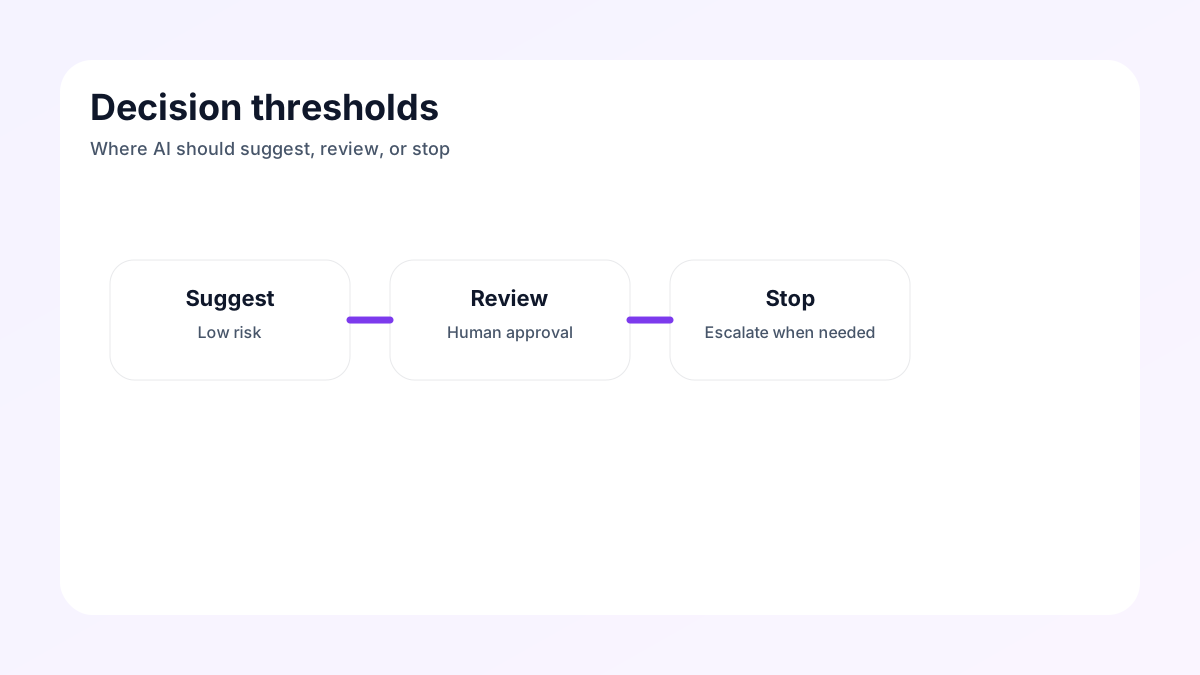
Three levels of control
- AI suggests
- AI acts with review
- AI acts independently within boundaries
The safest mode is suggestion. The next is review. The last is only appropriate when the risk is low, the rules are clear, and the logging is strong.
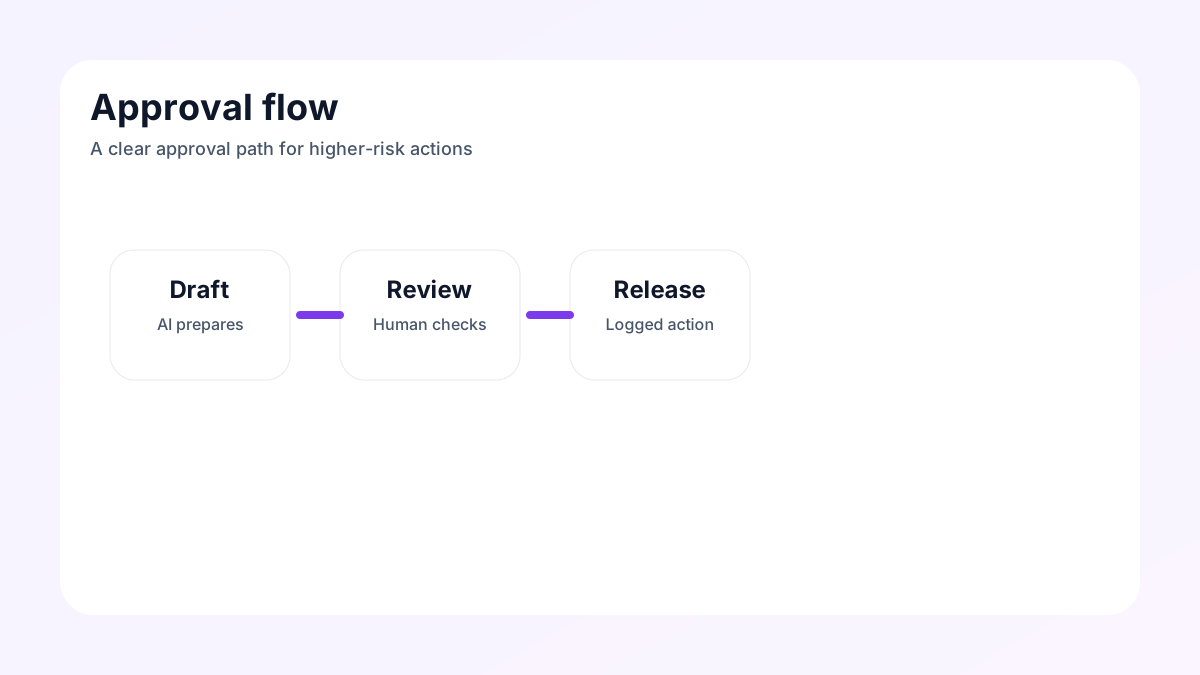
What good approval design looks like
- What needs approval?
- Who can approve it?
- What counts as an exception?
- What happens if the human disagrees?
- What gets logged for later review? If the approval path is unclear, the system will either be over-controlled and slow or under-controlled and risky.
Conclusion
The goal is not to keep humans involved everywhere. The goal is to keep them involved where they matter most. When AI is allowed to move quickly inside the right boundaries, the result is usually better than either full automation or pure manual work. At Akonita, we help teams turn AI curiosity into practical, measurable execution. If you want help with this, contact us here.