
Architecting Multi-Agent Systems for Reliability
TL;DR
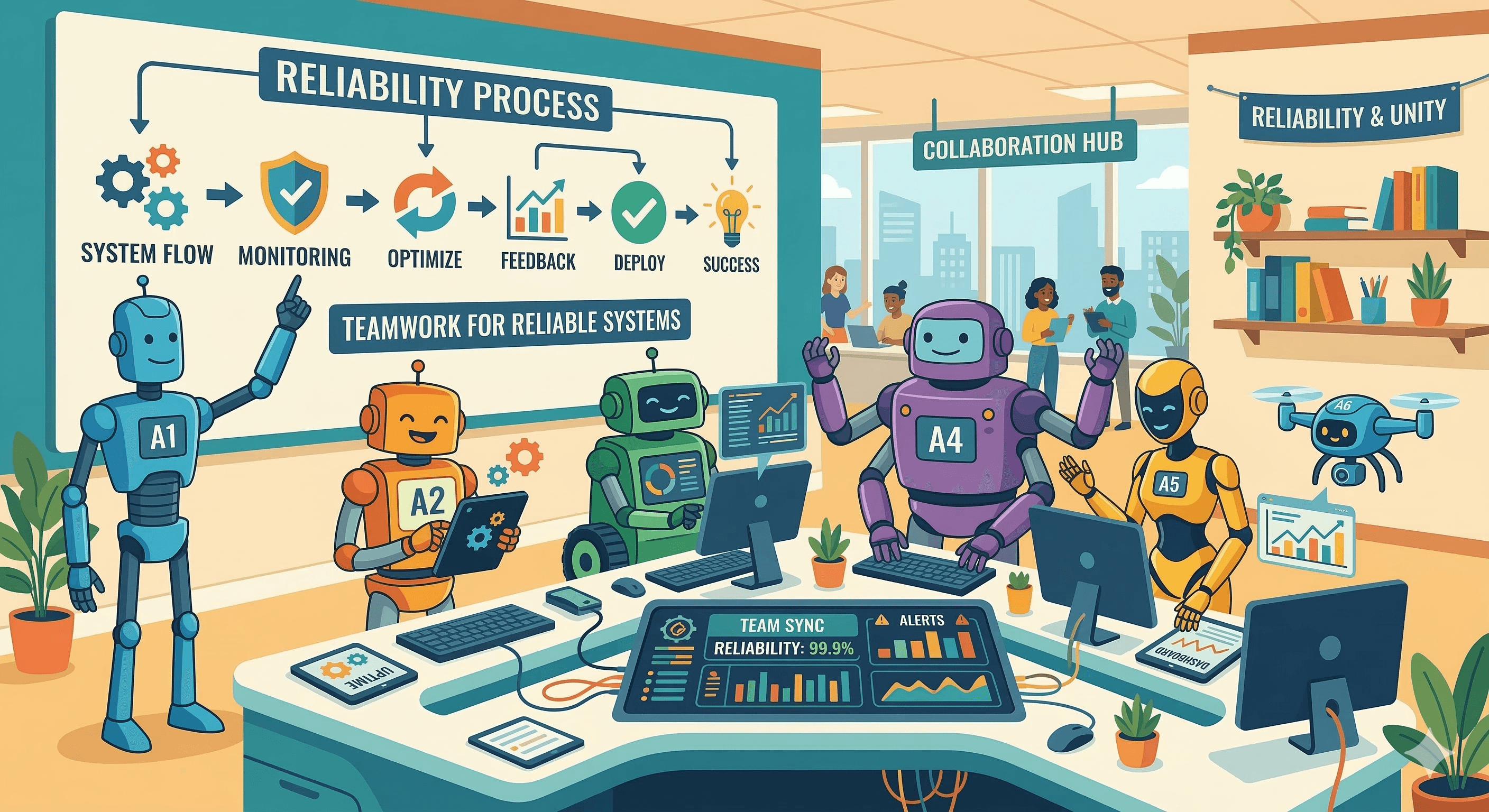
Multi-agent systems let us break big problems into small, smart workers — but they also introduce new ways for things to quietly go wrong. This piece walks through pragmatic patterns, real-world trade-offs, and operational habits you can apply to keep agentic systems reliable and safe in production.
1. Why reliability actually matters
Think of agents as coworkers. When one of them misreads instructions, it can send the whole team off chasing the wrong thing. In the real world that means unhappy customers, surprise costs, and awkward meetings with legal. Designing for reliability keeps the automation helpful instead of hazardous.
2. Failure modes you’ll meet in the wild
- Non-deterministic outputs that break downstream steps.
- Orchestration deadlocks where agents wait forever for each other.
- State drift — the system’s memory slowly goes stale.
- Resource surprises: API rate limits, token burn, and surprise bills.
- Silent partial failures: a half-done update is worse than no update.
3. Simple guiding principles
- Fail safe, not loudly: prefer predictable fallbacks and clear escalation paths.
- Make operations repeatable: idempotency is your friend.
- Observe everything: logs, traces, and metrics early — not later.
- Explicit contracts between agents: versioned schemas avoid “why did this change?” debates.
- Don’t trust outputs blindly — validate before you act.
4. Architecture patterns (with practical trade-offs)
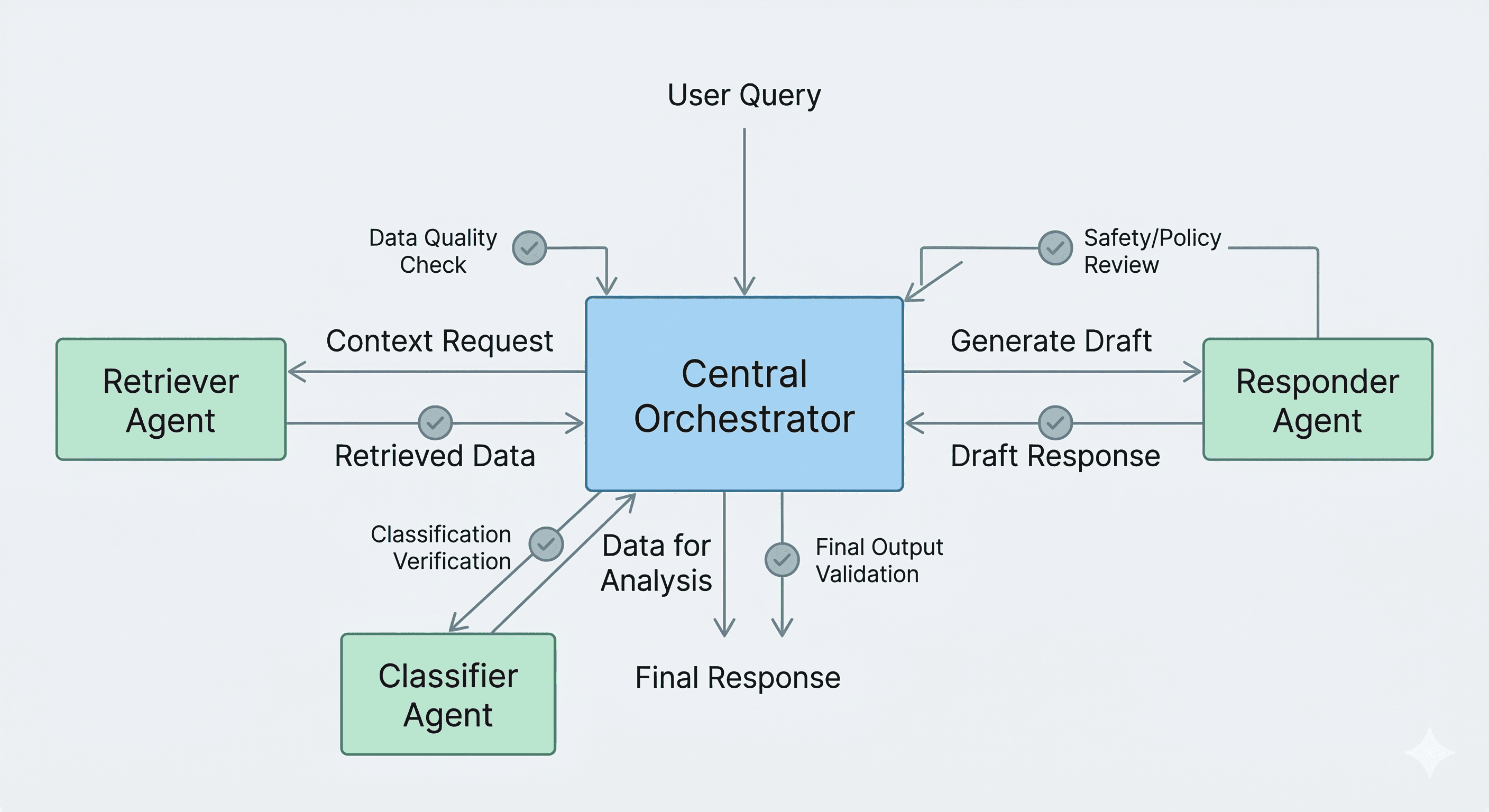
Orchestrator + Specialist agents (centralized)
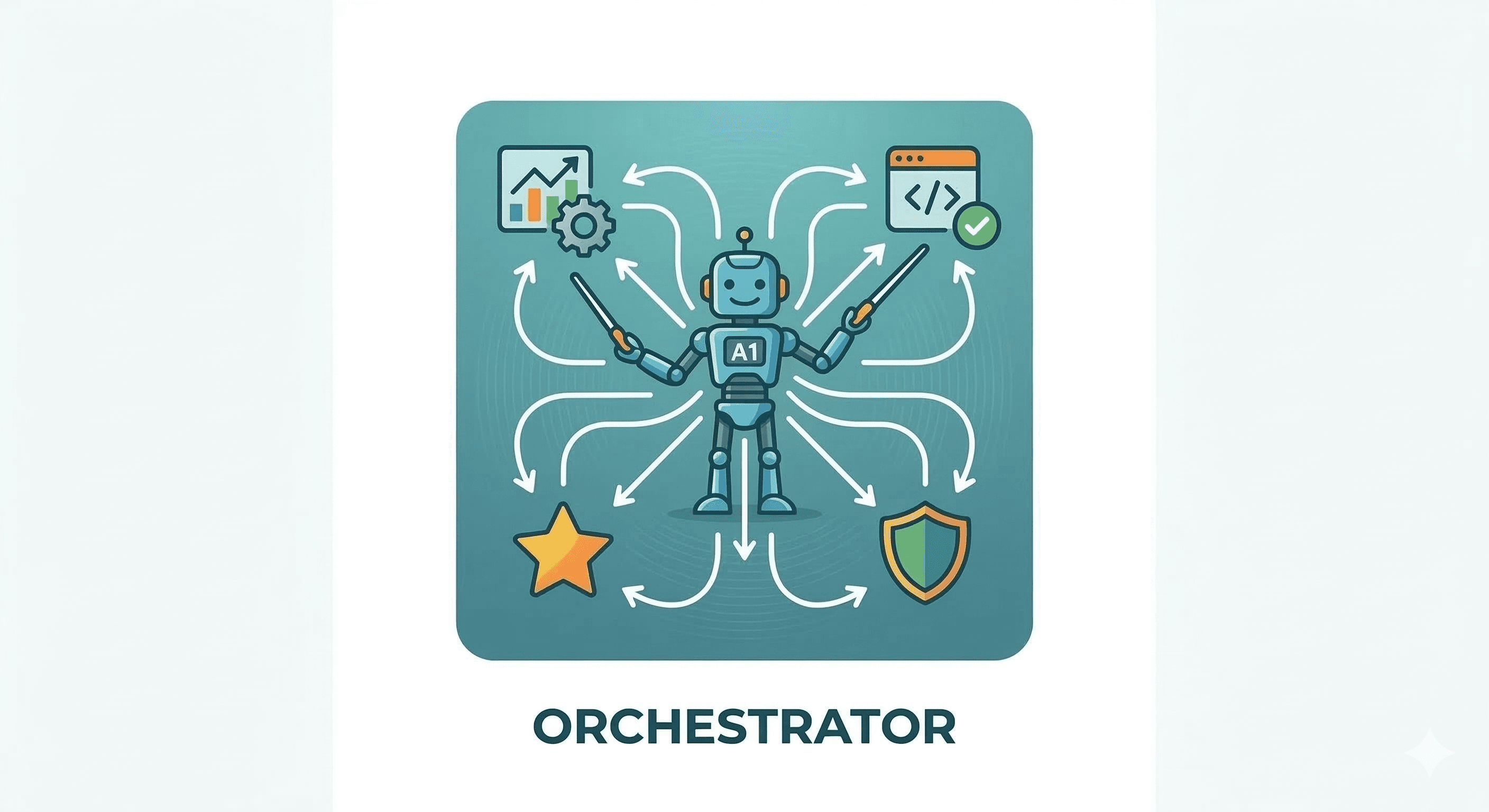
How it works: a conductor routes work to specialist agents (retriever, classifier, summarizer).
Why teams like it: easy to reason about global state and policies.
Watchouts: the orchestrator can become a traffic jam or single point of failure.
Practical tips:
- Keep the orchestrator as stateless as possible; persist checkpoints externally.
- Use a durable queue (Kafka/RabbitMQ) and dedupe keys.
- Monitor agent lag and apply back pressure rather than letting everything pile up.
Choreography (event-driven)
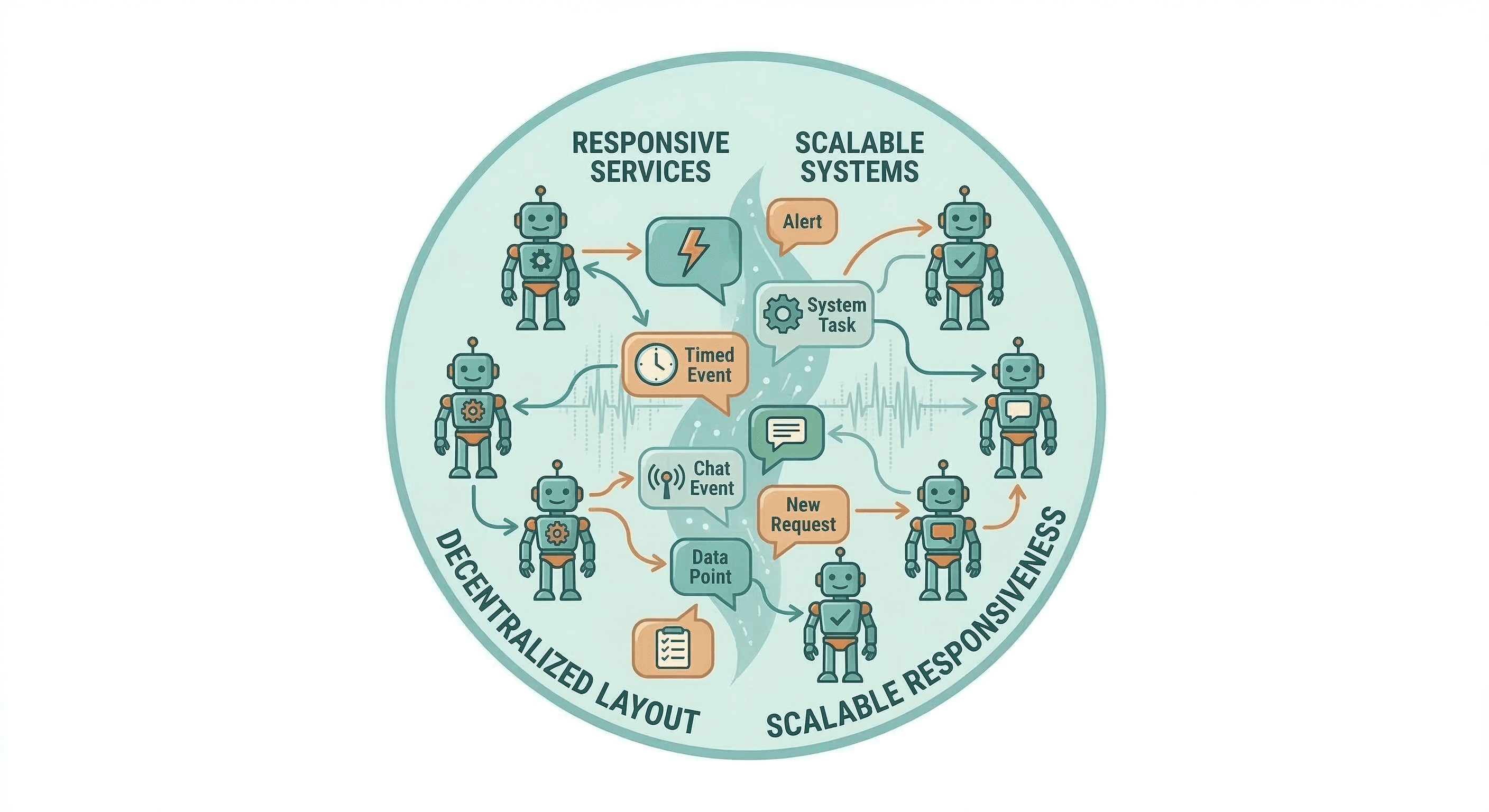
How it works: agents react to events, producing more events for others.
Why teams pick it: great for scale and decoupling.
Watchouts: tracing cause→effect gets harder.
Practical tips:
- Correlate events with trace IDs and keep an event schema catalog.
- Prefer brokers with strong delivery semantics for critical flows.
Supervisor trees (self-healing)
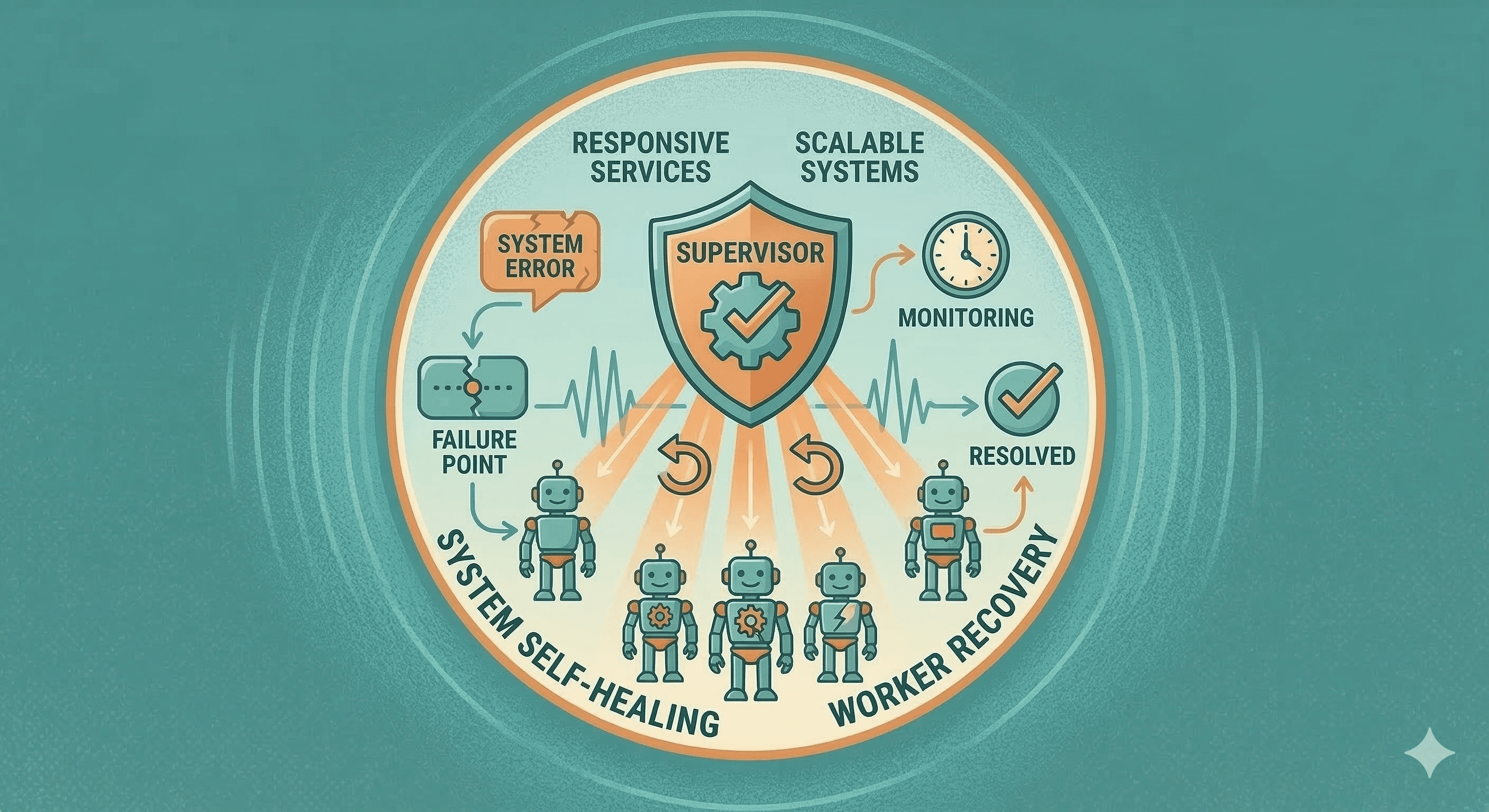
How it works: supervisor agents monitor workers and restart them if they fail.
Why teams like it: automatic recovery with isolation.
Watchouts: extra coordination logic needed.
Practical tips:
- Define clear restart policies (backoff, circuit breakers).
- Externalize durable state so restarts are cheap.
Shadowing & canaries (safe rollouts)
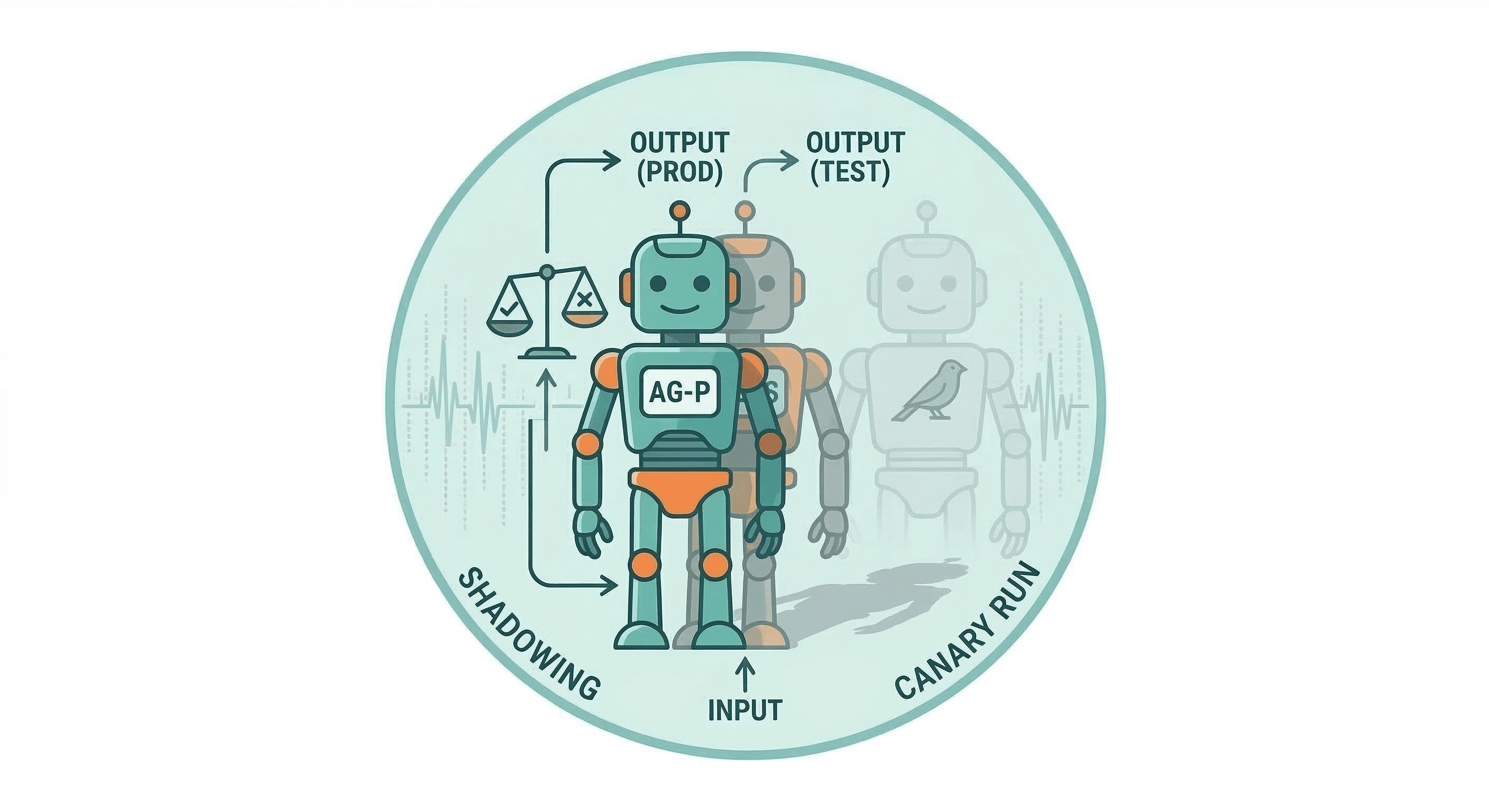
How it works: new agent versions run in “shadow” on production inputs but don’t act.
Why teams use it: catch regressions before they hit customers.
Watchouts: doubles compute and requires careful handling of side effects.
Practical tips:
- Run sampled traffic and automate divergence detection alerts.
5. Managing data and state (practically)
- Keep shared state in durable stores (Postgres, S3, Dynamo).
- Use idempotency keys for external side effects — retries should be safe.
- Version schemas and provide migration compatibility.
- Use append-only logs for easier replay and audits.
6. Observability — not optional
Instrument these things:
- Metrics: latency, success rates, queue depth, retry counts.
- Traces: end-to-end tracing with consistent IDs.
- Structured logs: include agent version, input hash, correlation IDs.
Set SLOs tied to business outcomes (e.g., 99% of triage tasks < 2s) and build dashboards that map technical signals to those outcomes.
7. Timeouts, retries, and graceful backoff
- Always set per-call timeouts and global workflow timeouts.
- Use exponential backoff with jitter for transient failures.
- Circuit breakers prevent you from thrashing a failing service.
- Persist checkpoints so long-running workflows can resume cleanly.
8. Don't trust agent outputs blindly
- Validate outputs with schema checks, probability thresholds, and business rules.
- Add validator agents for critical decisions.
- For risky actions, gate with a human-in-the-loop.
9. Testing & CI that actually catches issues
- Unit tests for logic, contract tests for messages.
- Replay recorded inputs in integration tests (golden inputs).
- Run chaos tests in staging: simulate broker failures, latency spikes, and partial restarts.
10. Cost control and graceful degradation
- Monitor cost per flow and set throttles for non-critical work.
- Use tiered processing: realtime fast path vs background best-effort path.
- Cache shared results (embeddings, summaries) to avoid repeated compute.
11. Security & governance, the boring but necessary bits
- Give agents least privilege.
- Keep audit trails: inputs, outputs, agent version for every action.
- Follow data-handling policies for PII and have incident playbooks ready.
12. Real example: a reliable support-triage pipeline
A short, practical flow:
- Ticket arrives → enqueue with correlation ID.
- Retriever fetches history (cached).
- Classifier labels urgency + confidence.
- Orchestrator routes to responder or human gate if confidence is low.
- Responder drafts reply; validator checks safety.
- Emit audit event and store checkpoint.
Reliability features to copy:
- Checkpoints after each stage.
- Confidence gating + human handoff.
- Shadow runs for classifier updates.
- Track metrics: time to triage, escalation rate, divergence rate.
13. Quick operational checklist (copy-paste)
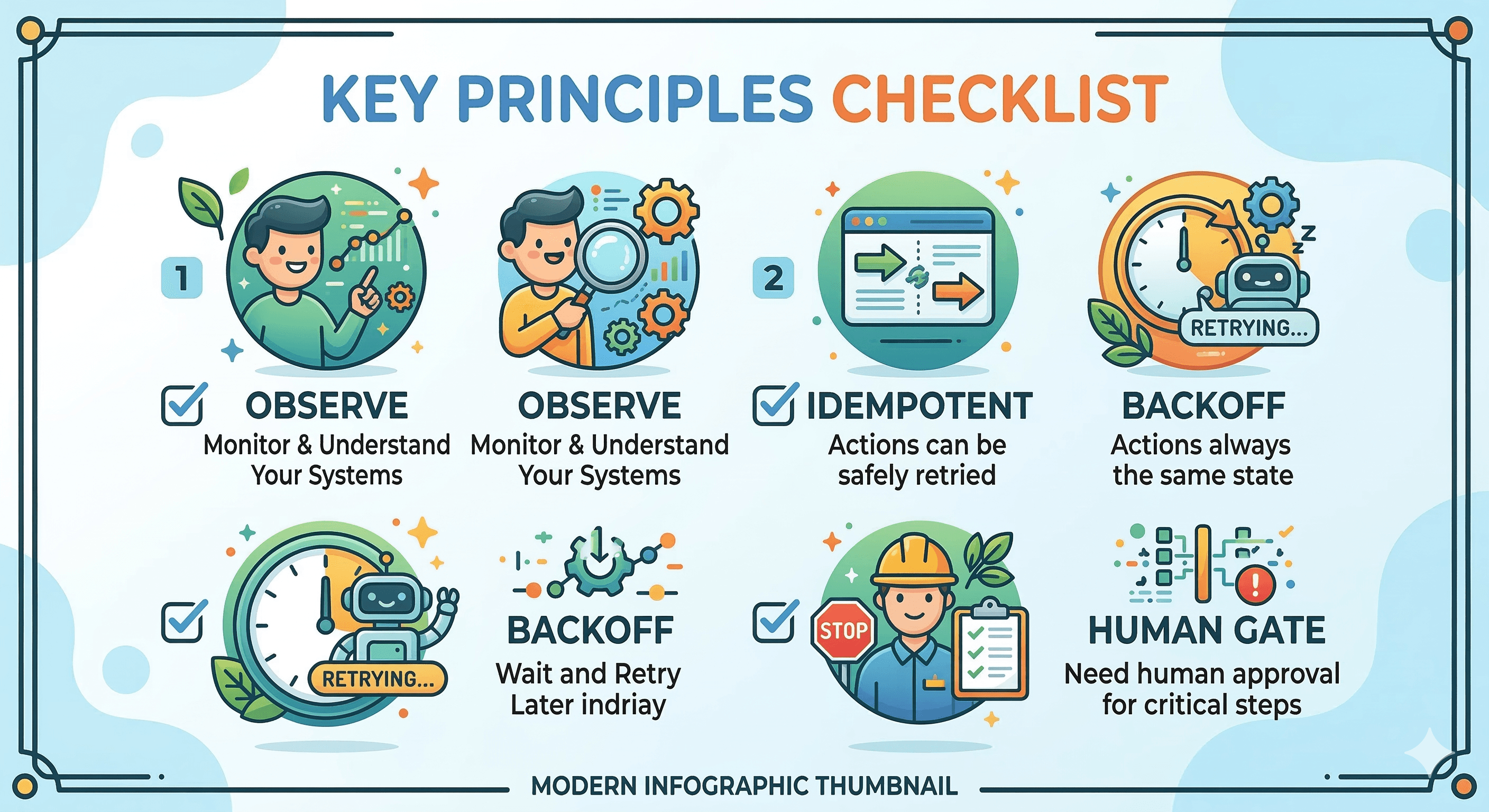
- Traces + metrics + logs with correlation IDs — live.
- Idempotency keys for external side effects — implemented.
- Timeouts, retries, circuit breakers — configured.
- Canary & shadow deployments for model changes — practiced.
- SLOs and dashboards — defined.
- Incident playbook with human failover — ready.
14. Which pattern when?
- Need central policy control → Orchestrator.
- Need scale and decoupling → Choreography.
- Want self-healing → Supervisor trees.
- Want safe rollouts → Shadowing/canaries.
15. Final thought
Reliability in multi-agent systems is more engineering than magic. Treat agents like teams: give them contracts, monitors, fallbacks, and escalation paths. Do that and they’ll make your product better instead of messier.