
From Pilot to Production: The 30/60/90-Day AI Rollout Plan

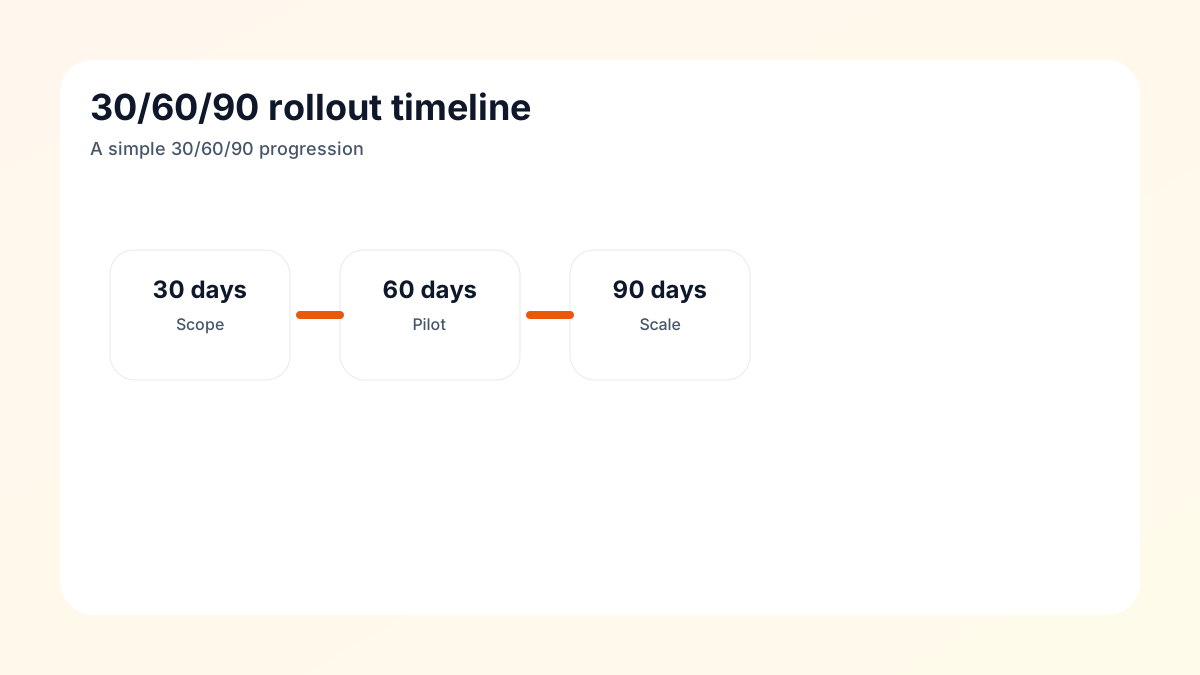
TL;DR: A lot of AI pilots fail for a strange reason. They do not fail because the idea is bad. They fail because the jump from experiment to production is too big. The model works in a narrow setting, the team gets excited, and then the project gets pushed into a wider environment before the process, ownership, and monitoring are ready. A 30/60/90-day rollout helps avoid that trap. It creates a simple sequence: scope first, pilot next, scale later.
Introduction
A lot of AI pilots fail for a strange reason. They do not fail because the idea is bad. They fail because the jump from experiment to production is too big. The model works in a narrow setting, the team gets excited, and then the project gets pushed into a wider environment before the process, ownership, and monitoring are ready.
A 30/60/90-day rollout helps avoid that trap. It creates a simple sequence: scope first, pilot next, scale later.
Why staged rollout works
- 30 days: Is this worth trying?
- 60 days: Does this work in practice?
- 90 days: Is this ready to expand?
That structure gives the team room to learn without pretending the pilot is already a production system.
The first 30 days: define and scope
- What problem are we solving?
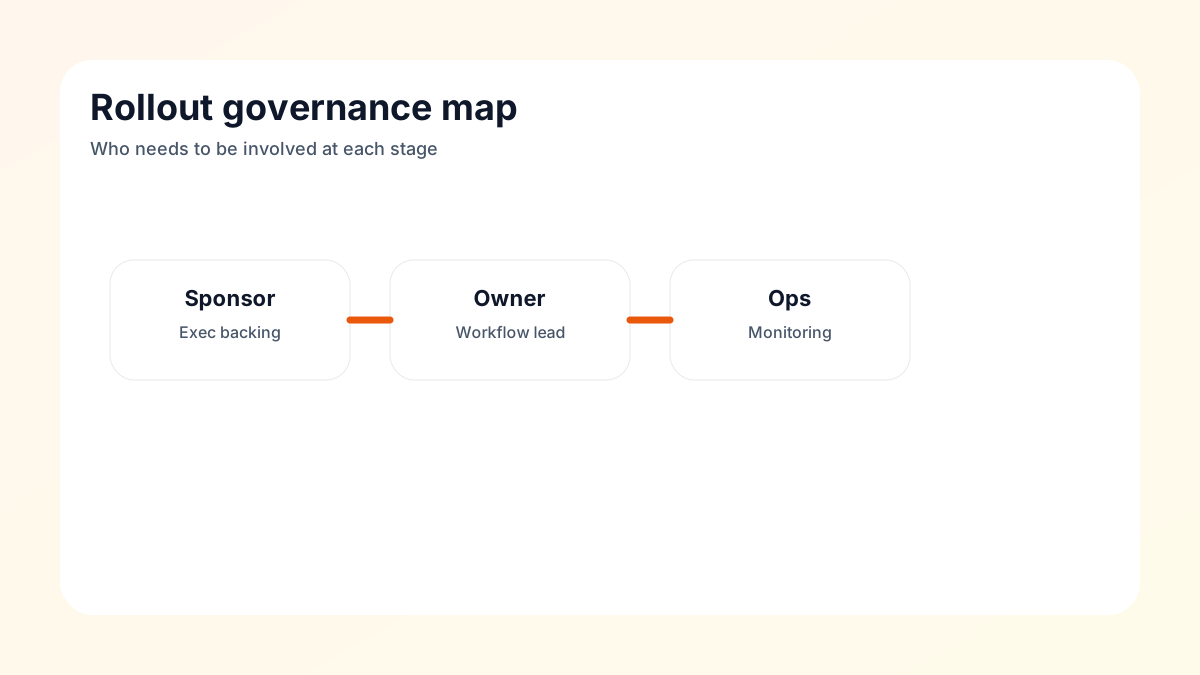
- Who owns the workflow?
- What data is needed?
- What does human approval look like?
- Which metric will prove value?
This is the stage where too many teams overbuild. Resist that. The goal is not a broad platform. It is a narrow, useful pilot.
The next 30 days: pilot and monitor
- What breaks in real use?
- Where do users hesitate?
- Which outputs need more review?
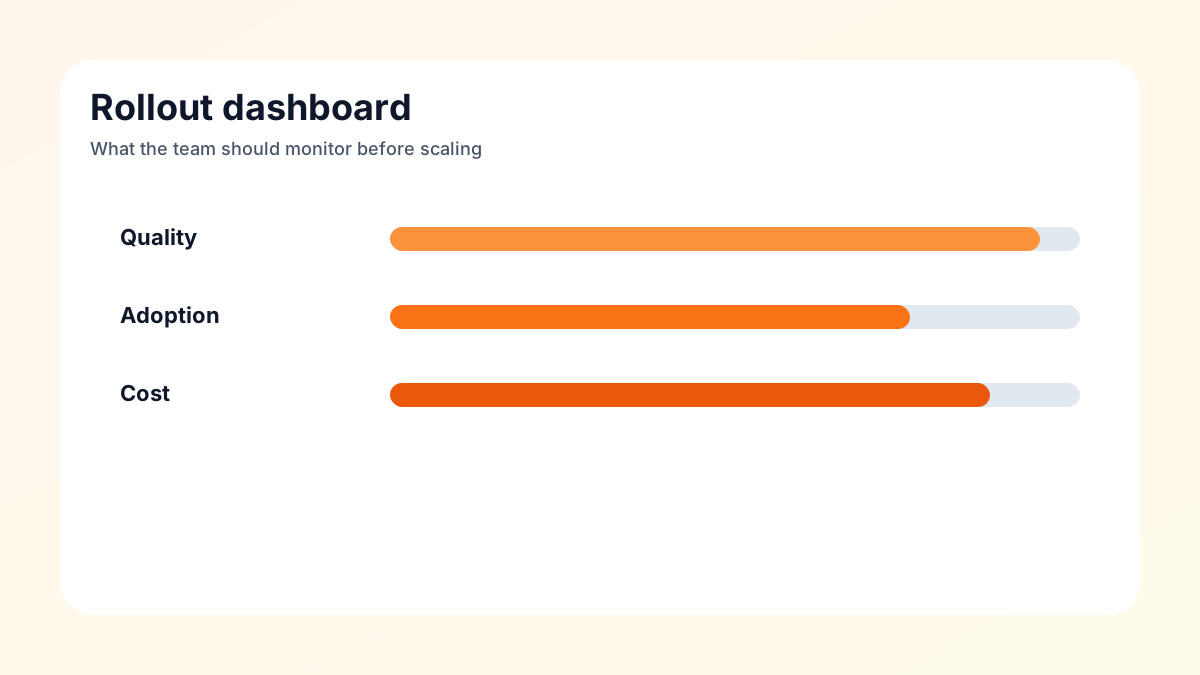
- Is the metric actually improving?
- What operational friction appears? If the pilot is noisy, that is not failure. It is information.
Conclusion
The teams that succeed with AI usually do two things well: they start small, and they know when to move. A 30/60/90-day rollout gives you both discipline and momentum. At Akonita, we help teams turn AI curiosity into practical, measurable execution. If you want help with this, contact us here.