
Building Efficient AI Pipelines for Enterprises

TL;DR: Modern AI programs win on operational discipline. When your pipelines are modular, observable, and secured end-to-end, every model update ships faster — and the business actually trusts the outputs.
Why Pipeline Design Determines AI Success
The fastest-growing enterprises treat their AI stack like any other mission-critical system. Data does not meander from source to model — it flows through intentional stages with ownership, guardrails, and telemetry.
The difference between AI that delivers value and AI that collects dust in a notebook is not the model. It is the pipeline around it. A well-designed pipeline means your team spends time on analysis and decisions, not on fixing broken data feeds or wondering why last week's retraining silently failed.
Below is the playbook we use with clients who want higher accuracy, less rework, and AI outputs the business can actually act on.
Best Practices to Keep Pipelines Efficient
1. Design in modules, not monoliths.
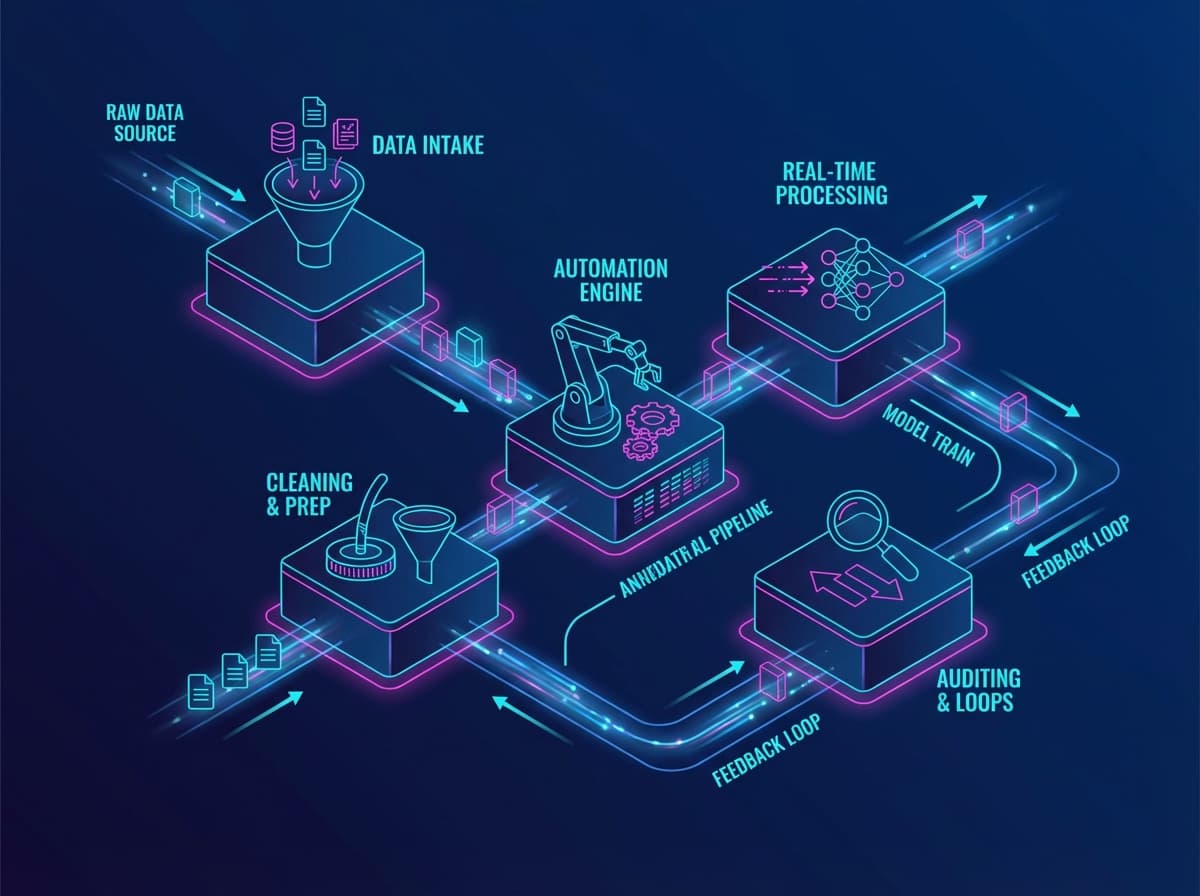
Breaking pipelines into reusable components — ingest, prep, train, evaluate, deploy — lets teams upgrade one block without dragging down the rest. When your data prep step needs an overhaul, your deployment layer should not even notice. Modular design also makes it easier to assign clear ownership: the data team owns ingestion, the ML team owns training, and ops owns deployment. No blurred lines, no finger-pointing.
2. Obsess over data quality upstream.
The most common cause of AI project failure is not a bad model — it is bad data feeding a good model. Automate profiling, schema validation, and drift detection early in the pipeline so downstream models never inherit silent errors. A data quality check that catches a schema change before training saves weeks of debugging later. Invest here disproportionately.
3. Automate the glue work.
Manual steps between pipeline stages are where errors hide. Trigger retraining when data volumes shift. Run evaluation suites automatically after every training run. Generate feature freshness reports on a schedule. Use orchestrators to handle the plumbing so your humans focus on exception handling and strategic decisions — not on "did the Friday job run?"
4. Blend batch and real-time processing.
Not every signal needs sub-second latency, and not every report can wait for the nightly batch. Pair streaming layers with scheduled jobs so hot signals hit dashboards instantly while historical windows provide the full context. The art is knowing which data matters in real time and which data is fine on a four-hour delay.
5. Schedule regular pipeline health checks.
Performance reviews should not wait for outages. Bake quarterly pipeline audits into your ops cadence. Check for: model drift, data schema changes, infrastructure cost creep, and security posture. Technical debt in pipelines compounds silently — regular inspections keep it from becoming a crisis.
Tools and Technologies We Reach For
| Layer | What We Use | Why |
|---|---|---|
| Streaming | Apache Kafka | Durable commit log that feeds both ML features and downstream applications without duplication or data loss. |
| ML Ops | TensorFlow Extended (TFX) | Opinionated components — ExampleGen, Trainer, Evaluator — that standardize deployments and make handoffs between teams predictable. |
| Orchestration | Kubernetes + Argo | Declarative workflows that autoscale training and inference jobs, keep rollouts repeatable, and make rollbacks painless. |
Pair these with observability tooling — OpenTelemetry, Datadog — so every pipeline run leaves a trail you can debug. If you cannot answer "what happened in last night's training run?" in under 30 seconds, your observability is not good enough.
Security Cannot Be an Afterthought
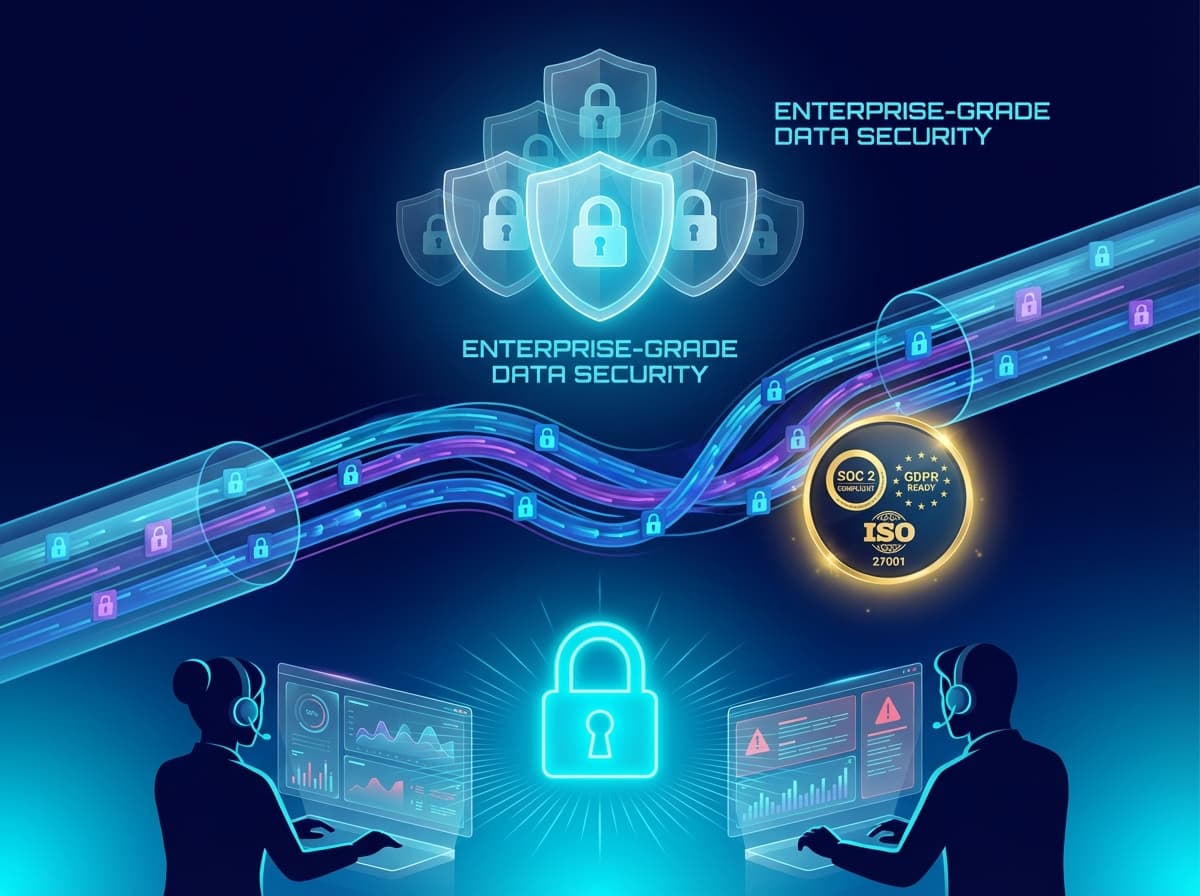
Security in AI pipelines is not a checkbox at the end. It is built into every stage:
- Encrypt everywhere. Use KMS-managed keys for data at rest and mutual TLS for data in transit. Training data, model weights, and inference outputs should all be encrypted by default.
- Harden access controls. Adopt least-privilege IAM roles so annotators, engineers, and models only touch the data they actually need. A training job should not have write access to your production database.
- Run red-team audits. Quarterly penetration tests plus automated vulnerability scans catch misconfigurations before attackers do. Test your pipeline for prompt injection, data exfiltration, and privilege escalation.
- Map to regulations. Document how each stage meets GDPR, HIPAA, or industry mandates. When a compliance review comes, you want to hand over a diagram and a log — not a scramble.
Real-World Results
Retail inventory forecasting. A national grocery chain rebuilt their demand forecasting pipeline into event-driven modules. The key change: real-time ingestion of point-of-sale data replaced a 24-hour batch. Planners finally trusted same-day demand signals. Result: fresh-food waste dropped by 30% in the first quarter because orders matched actual demand instead of yesterday's averages.
Financial fraud detection. A payment processor automated feature extraction and nightly model retraining. Previously, their fraud models were updated monthly — a window attackers learned to exploit. After the pipeline overhaul, detection accuracy rose 20% while human alert fatigue dropped because false positives were filtered at the model layer before reaching analysts.
Implementation Checklist
- Define the business KPI your pipeline must move — latency, cost reduction, accuracy, revenue. Start with the outcome, not the architecture.
- Document each stage, its owner, and its success metric. If nobody owns a stage, it will fail silently.
- Select tooling that matches your team's existing skills. A brilliant tool nobody knows how to debug is worse than a boring tool everyone understands.
- Instrument with logs, traces, and alerts before the first user touches it. Retroactive observability is just guesswork with a dashboard.
- Schedule recurring reviews for performance, bias, and security posture. Pipelines degrade over time — plan for it.
Conclusion
Efficient AI pipelines are the difference between experiments that stall in notebooks and systems that reshape how an enterprise operates. Modular components, trusted data, proactive security, and the right orchestration turn AI from a cost center into a compounding advantage.
The model matters. But the pipeline around it matters more.
Need a partner to build or modernize yours? Let's talk.