
The Role of AI in Ethical Business Practices

TL;DR: Ethical AI is not a policy document, it is an operating model. Businesses need clear boundaries, accountable owners, auditable workflows, and human oversight if AI is going to scale safely and earn trust.
Introduction
AI is changing how businesses operate, make decisions, and serve customers.
It is improving speed, reducing manual effort, and helping teams work with more precision. But as AI becomes more embedded in day-to-day operations, one question matters more than ever.
Are businesses using it responsibly?
That is why ethical AI in business is no longer a side topic. It is a leadership issue.
The role of AI in ethical business practices is not just about compliance. It is about trust, accountability, data responsibility, and making sure efficiency does not come at the cost of fairness or sound judgment.
At Akonita, we see this clearly in Agentic AI. The more capable and action-oriented a system becomes, the more important ethical discipline becomes. Responsible AI is not only about what a system can do. It is about what it should do, how it should do it, and who remains accountable.
Why AI Ethics Matters in Business
Businesses do not use AI in isolation.
They use it inside real workflows that affect real people, including customers, employees, partners, and leadership teams.
That means AI can influence:
- Customer support interactions
- Hiring and internal assessments
- Financial or operational decisions
- Marketing and personalisation
- Data access and privacy controls
- Product recommendations and automated actions
When these systems are poorly governed, the risk goes beyond technical failure.
Businesses can face:
- Loss of customer trust
- Reputational damage
- Regulatory exposure
- Internal confusion about accountability
- Decisions that appear efficient but produce unfair outcomes
Ethical AI is not about slowing innovation. It is about making sure innovation does not outrun responsibility.
What Ethical AI in Business Actually Means
The phrase ethical AI is easy to agree with and easy to misuse.
For it to be useful, it needs to be operational.
In practice, ethical business use of AI depends on five core principles.
1) Transparency
People should understand when AI is being used, especially when it affects decisions, recommendations, or interactions.
2) Accountability
A business must always know who owns the outcome of an AI-supported workflow. AI can support decisions, but it cannot hold responsibility.
3) Fairness
AI systems should be monitored to reduce harmful bias and avoid unfair outcomes across different groups.
4) Privacy and data responsibility
Businesses must handle customer, employee, and operational data carefully, lawfully, and proportionately.
5) Human oversight
Important decisions should not be left to automation without review, escalation paths, and control.
These are not abstract values. They are operating requirements for businesses that want to use AI responsibly at scale.
How AI Can Support Ethical Business Practices
AI is not only a source of risk. When designed well, it can also help businesses operate more ethically.
For example, AI can help businesses:
- Detect unusual activity or compliance risks earlier
- Improve auditability and documentation
- Surface inconsistent decision patterns
- Strengthen quality control in customer interactions
- Reduce avoidable human error in repetitive workflows
- Support more consistent policy enforcement
The goal is not to avoid AI.
The goal is to apply AI in a way that strengthens responsibility instead of weakening it.
Where Businesses Get It Wrong
Many businesses talk about responsible AI, but their operating model tells a different story.
Common mistakes include:
- Deploying AI without clear internal ownership
- Using opaque tools without understanding output behavior
- Automating sensitive decisions too aggressively
- Treating policy as a checkbox instead of a workflow control
- Collecting or using more data than the use case requires
- Assuming efficiency gains automatically justify the system
These mistakes usually happen when ethics is treated as a communications issue instead of an operational issue.
That is where problems begin.
Why Agentic AI Raises the Stakes
Traditional AI can already create ethical risk.
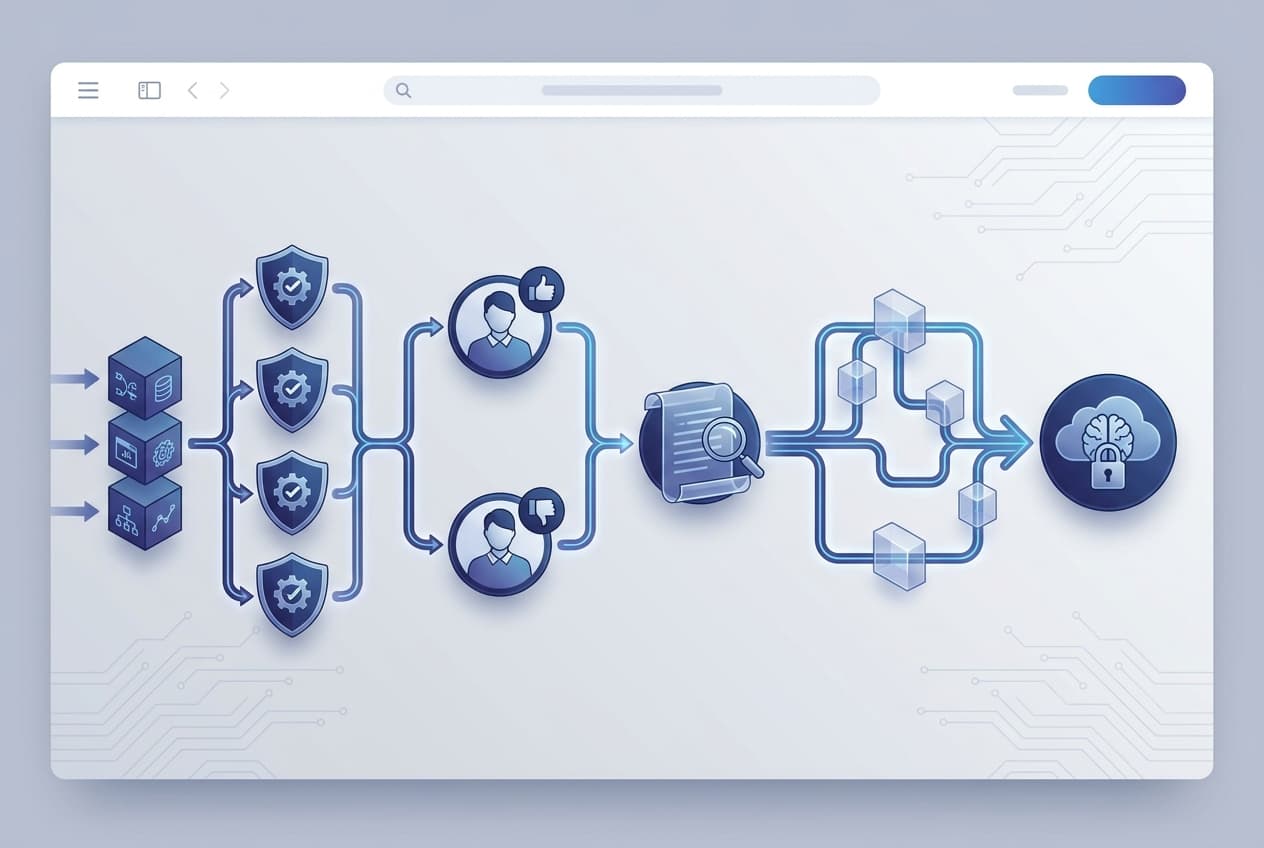
Agentic AI raises the stakes further because it can reason across steps, use tools, trigger actions, and operate across complex workflows.
That means businesses need stronger answers to questions like:
- What is the agent allowed to do?
- When is human approval required?
- What happens when the system gets something wrong?
- How are actions logged and reviewed?
- How are exceptions escalated?
- Who owns the final outcome?
These are not technical details to clean up later.
They are central to whether a business is using AI ethically at all.
An Ethical AI Operating Checklist
If you want AI governance to survive delivery pressure, bake it into operations:
- Define acceptable use cases and prohibited actions
- Set approval thresholds for sensitive actions
- Restrict data and tool access by role
- Keep audit logs for key decisions and actions
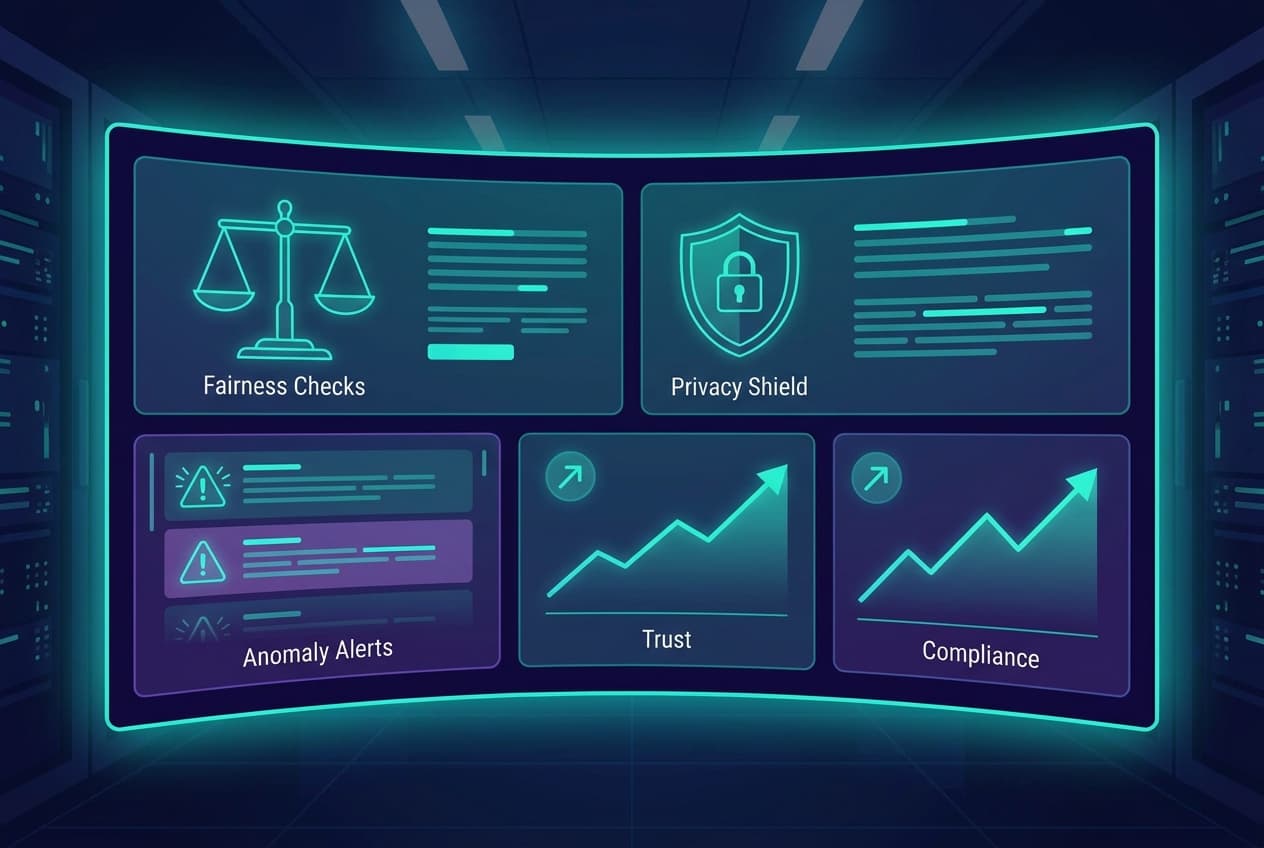
- Monitor bias, drift, and high-risk failure patterns
- Assign named owners for outcomes and escalations
- Review incidents and update controls regularly
This is how AI ethics moves from principle to operating model.
The Business Value of Responsible AI
Some leaders still treat ethics as friction.
In reality, responsible AI in business protects speed over the long term.
Businesses that use AI responsibly are more likely to create:
- Stronger customer trust
- Higher internal confidence in AI systems
- Lower regulatory and reputational risk
- Clearer governance across teams
- More sustainable long-term adoption
AI is becoming operational infrastructure.
And infrastructure without trust eventually becomes a liability.
Practical Questions Leaders Should Ask
If a business is serious about ethical AI, leadership should ask:
- Where is AI currently making or influencing decisions?
- Which of those decisions create ethical, legal, or reputational risk?
- Do we have clear human accountability?
- Are our data practices defensible and proportionate?
- Can we explain how the workflow behaves?
- Are we monitoring for harmful outcomes, not just technical performance?
These questions move the conversation beyond branding and into governance.
FAQs About AI and Ethical Business Practices
What is ethical AI in business?
Ethical AI in business means using AI in a way that is transparent, accountable, fair, privacy-conscious, and properly governed. It ensures AI supports business goals without undermining trust or responsibility.
Why is AI ethics important for businesses?
AI ethics matters because AI can affect customer experience, employee outcomes, compliance, privacy, and decision-making. Poor governance creates operational, legal, and reputational risk.
Can AI improve ethical business practices?
Yes. AI can improve consistency, surface risk earlier, strengthen auditability, and reduce preventable errors when governed properly.
What are the risks of using AI unethically?
Main risks include biased outcomes, poor transparency, privacy breaches, harmful automation, reputational damage, regulatory issues, and loss of trust.
How is Agentic AI different from traditional AI in ethical terms?
Agentic AI can take more actions across more complex workflows, which increases the need for boundaries, oversight, accountability, and review.
Conclusion
The role of AI in ethical business practices is not peripheral. It is central.
As AI becomes more capable, ethical discipline becomes part of business discipline.
The businesses that succeed with AI over the long term will not be the ones that automate the most. They will be the ones that combine capability with accountability, speed with judgment, and innovation with trust.
At Akonita, we help businesses design Agentic AI systems that are effective, governable, transparent, and commercially responsible.
If you want to build an ethical AI operating model for your business, talk to us here: https://akonita.com/contact.