
How We Improved Support Triage With Agentic AI
Introduction
Your support team is drowning in tickets. Not because they are slow — because the triage process itself is the bottleneck. Every minute a high-priority issue sits in the wrong queue is a minute your customer is getting more frustrated. And every minute a senior agent spends sorting through low-complexity requests is time they cannot spend on problems that actually need their expertise.
We recently worked with a client facing exactly this problem. Their NLP-based triage system had hit its ceiling. Here is how we replaced it with an AI Agentic system — and what the numbers looked like after.
The Problem They Were Facing
The client's existing system relied on a traditional NLP-based triage engine. It was a reasonable first step but had clear limitations:
- Keyword matching failed on nuance. A ticket saying "my order never arrived" and "my order arrived damaged" looked similar to the classifier even though one is a shipping issue and the other is a quality complaint.
- Prioritization was rigid. Rules-based routing sent tickets to queues based on static keywords with no awareness of customer history, contract tier, or urgency signals.
- Volume was growing faster than headcount. As the business scaled, the triage system did not. Human agents were spending increasing time re-sorting misrouted tickets before they could start actual work.
The team needed a system that understood context — not just words.
The Evolution to AI Agentic Triage
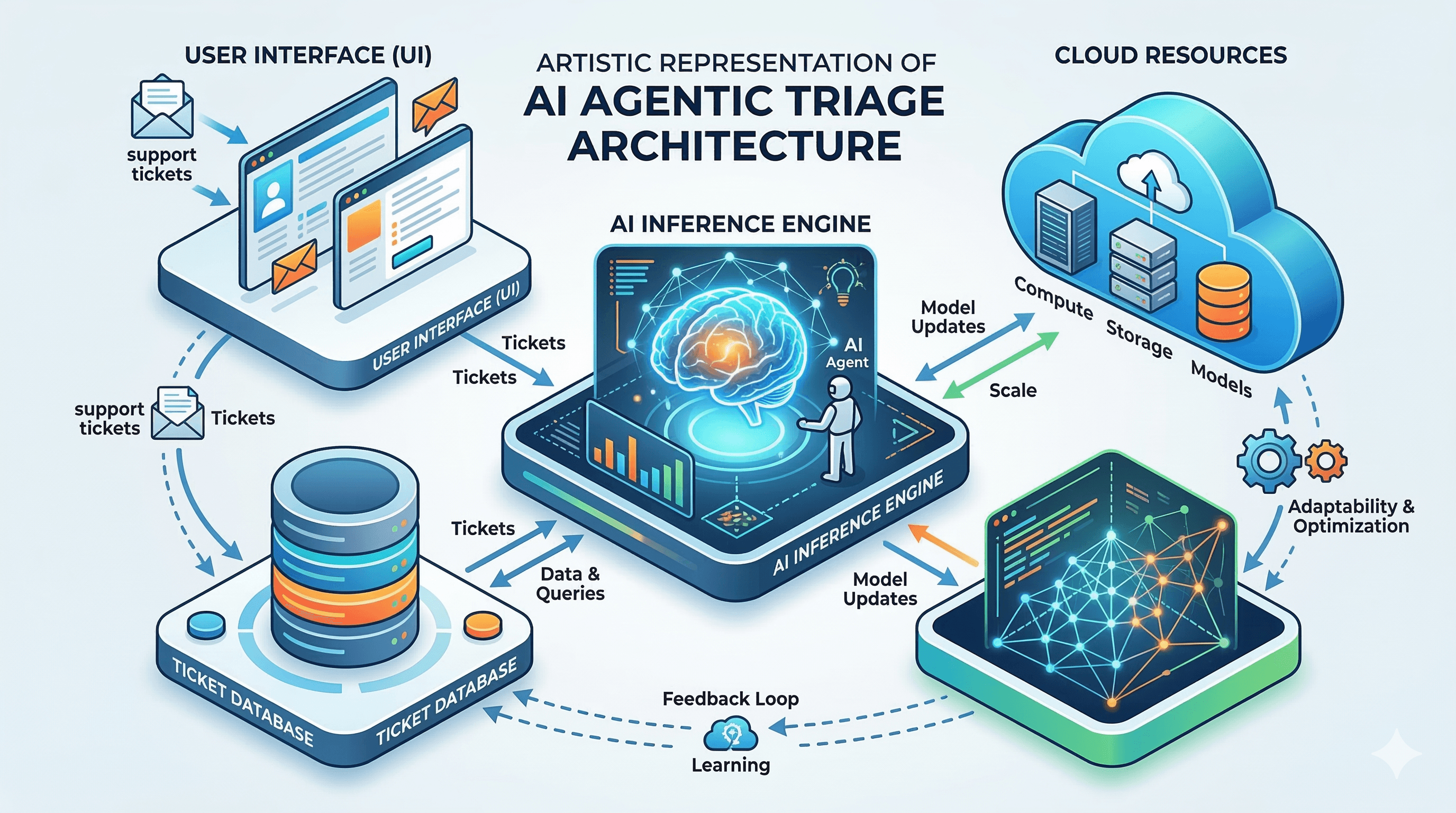
We rebuilt the triage layer from the ground up. Instead of extracting keywords and matching against rules, the new system uses inference-based models that understand intent.
An AI Agentic triage system does not just read the ticket text. It pulls in context: the customer's history, the product or service involved, previous interactions, and patterns from similar tickets across the entire dataset. Then it classifies, prioritizes, and routes — all in real time.
What Changed Under the Hood
- From keyword extraction to intent inference. The model understands that "my login is broken" and "I can't get into my account" are the same problem stated differently.
- From static rules to dynamic prioritization. The agent weighs urgency based on customer tier, issue severity signals, and SLA windows — not a fixed keyword list.
- From batch processing to real-time routing. Tickets are classified and assigned the moment they arrive, with full context attached for the receiving agent.
Implementation: How We Built It
The transition followed four deliberate phases:
1. Data preparation. We used the client's historical support tickets — years of real data — to train the inference models. The key was cleaning and labeling this data so the model learned from actual outcomes, not just ticket text. A ticket that looked low-priority but escalated to a manager was a training signal.
2. Model development. We built models designed for continuous improvement. Each new ticket, each agent correction, each resolution outcome feeds back into the system. The model gets smarter every week without anyone touching a config file.
3. Integration. The triage agent was connected to the existing support stack — ticketing system, CRM, knowledge base — so it could pull full context on every ticket without requiring agents to switch tools. Real-time operation meant zero disruption to the support workflow.
4. Testing and iteration. We ran the new system in shadow mode alongside the old one for two weeks, comparing routing decisions. Agents flagged disagreements. We tuned. Then we cut over.
What the System Does Now
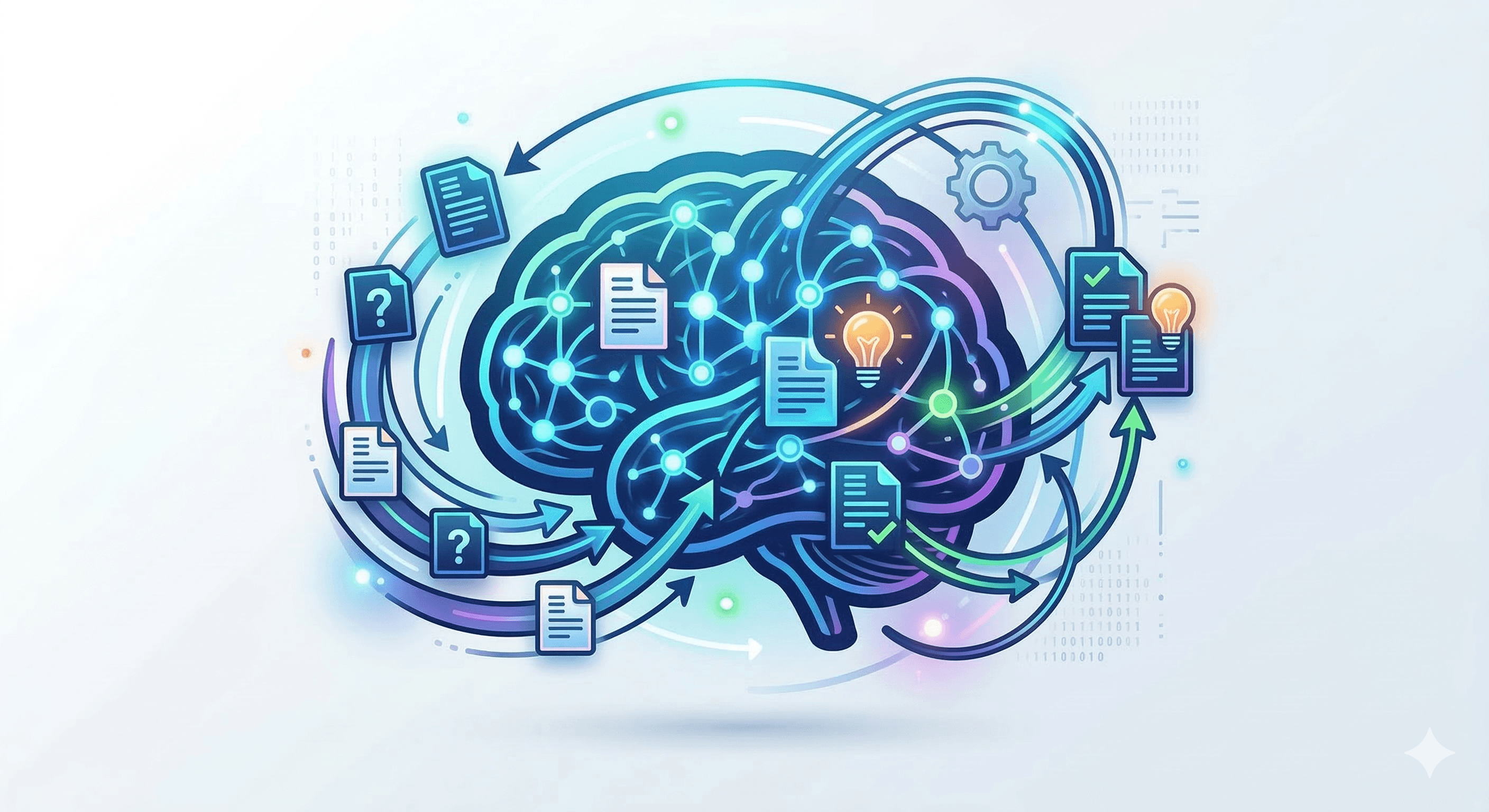
- Smart ticket analysis. The agent reads a ticket, infers the actual problem, identifies the customer, pulls their history, and categorizes the request — all before a human sees it.
- Dynamic prioritization. Urgency is assessed based on real signals: customer tier, issue type, sentiment, and SLA risk. A premium customer reporting a payment failure routes differently than a free-tier user asking about a feature.
- Continuous learning. Every agent correction, every resolution path, every escalation feeds back into the models. The system adapts as the business evolves.
Metrics and Results
After deployment, the numbers told a clear story:
- 40% reduction in average response time. Tickets reached the right person on the first try instead of bouncing between queues.
- First-response rate on high-priority tickets improved significantly. Critical issues stopped getting buried in general queues.
- Customer satisfaction scores rose. Faster, more accurate routing means faster resolutions. Customers noticed.
The downstream effect was just as important: senior agents spent less time triaging and more time solving. Support leadership got better reporting on issue patterns because classification was consistent.
The Automated Responses Layer
One capability that exceeded expectations was the automated response feature.
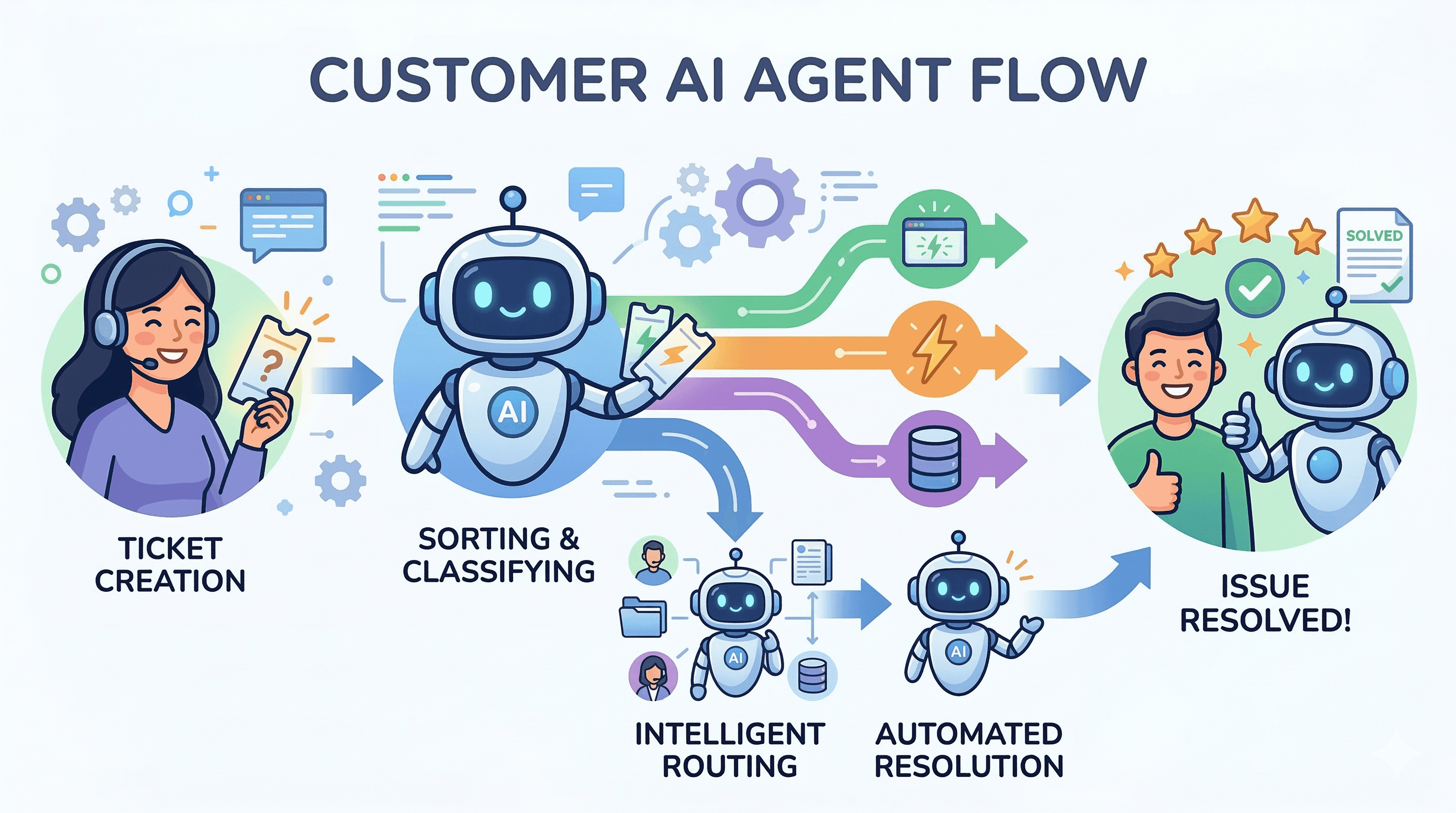
Using a retrieval-augmented generation (RAG) approach, the system can now automatically and accurately respond to over 30% of incoming requests. These are not canned replies — they are generated responses that pull from the knowledge base and customer context, then drafted in the client's support tone.
How It Works
The system identifies common request patterns from historical data, matches incoming tickets against known resolution paths, and generates a response using approved templates and knowledge base content. If confidence is high, the response goes directly to the customer. If it is medium, a draft is prepared for agent review. If it is low, the ticket routes to a human with full context.
What Changed for the Support Team
- Routine inquiries — password resets, order status, return policies — are handled without human intervention.
- Agents focus on complex, high-value interactions instead of burning hours on repetitive replies.
- Response time on common questions dropped from hours to seconds.
Why Agentic AI Makes the Difference
Traditional NLP triage hits a wall when language gets messy — and customer language is always messy. Agentic AI handles ambiguity because it reasons about intent rather than matching keywords.
The difference is not incremental. It is the difference between a system that sorts and a system that understands. When your support volume is growing, "sorting faster" is not enough. You need understanding at scale.
Need Help with Your Support Triage?
If your support team is spending too much time routing tickets and not enough time solving problems, an AI Agentic triage system might be the answer.
Talk to us about a pilot for your support operations. We will map your current triage flow, identify where context is getting lost, and show you what an agentic system would look like in your environment.