
The Future of Digital Marketing: Trends to Watch in 2026
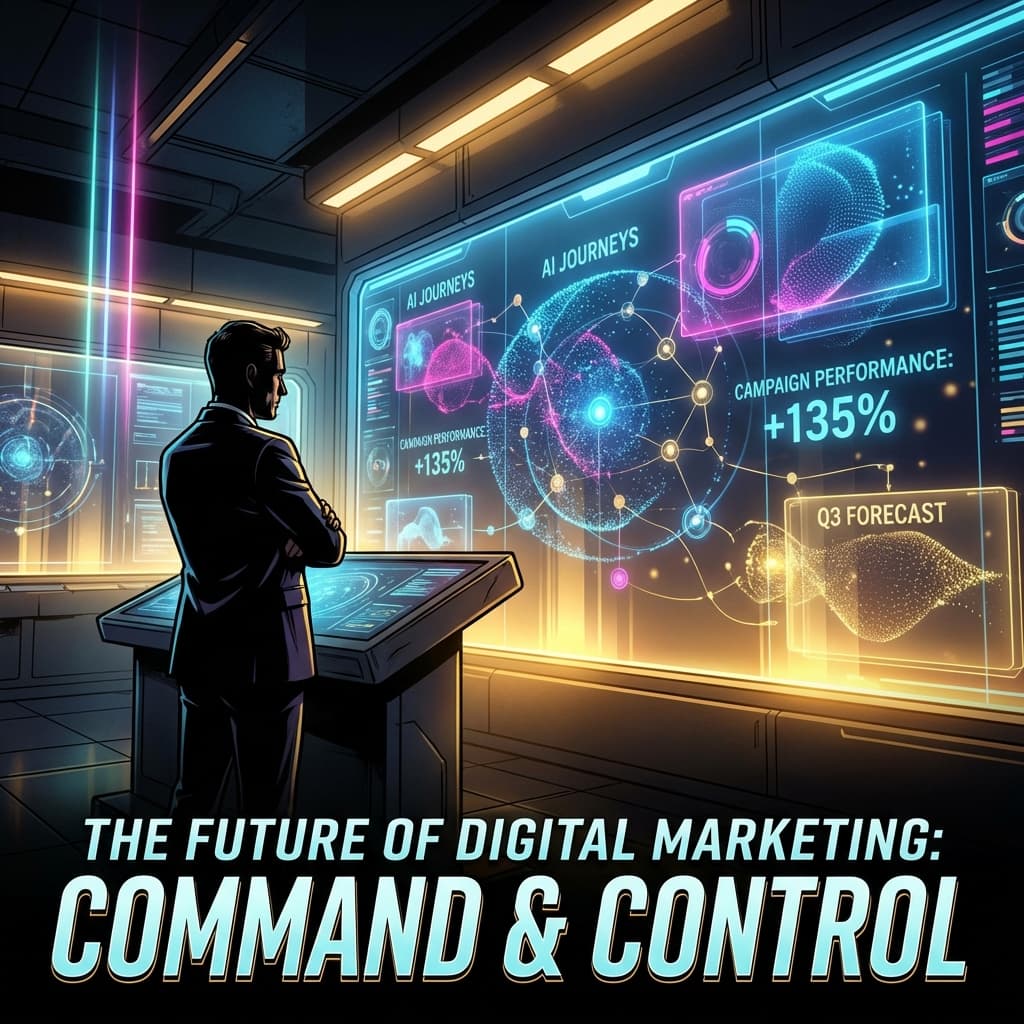
The brands winning 2026 treat marketing like a living system, not a quarterly campaign calendar.
Every quarter brings a new wave of predictions about what will change in digital marketing. Most of it is noise. But a few signals are real — and they are already showing up inside enterprise roadmaps. Here is what we are seeing, and more importantly, what to do about it.
1. AI Becomes the Default Co-Pilot for Marketing Teams
AI is no longer an experimental bolt-on. Mature teams are pairing historical CRM data, campaign performance metrics, and product analytics with generative copilots to make every touchpoint adaptive — from the subject line to the landing page to the follow-up sequence.
What this looks like in practice: a lifecycle campaign that adjusts messaging based on a customer's last three interactions, not a static segment. A paid search ad that rewrites itself based on what is converting today, not last month's best guess.
Playbook upgrades this quarter:
- Connect clean, governed datasets to an internal AI workspace so prompts stay on-brand and compliant.
- Configure predictive audience scoring that refreshes every time a customer engages — then feed those scores back into paid, lifecycle, and sales motions.
- Build prompt libraries that explain how the model should think: tone, escalation paths, disallowed topics. Do this before it generates a single asset.
Treat AI like a teammate: give it owners, guardrails, and KPIs. The teams that do see double-digit engagement lifts and significantly lower production time.
Signal to watch: Marketing ops teams are adopting prompt QA rituals, and CMOs are hiring their first Director of AI Enablement. This role did not exist two years ago. It will be standard within two more.
2. Voice and Multimodal Search Finally Convert
Google reports that more than a quarter of the global online population already uses voice search on mobile, and assistants are blending text, vision, and audio into single queries. That means intent-rich, conversational searches — "How should I handle a delayed shipment?" or "Show me running shoes for flat feet" — are now the norm, not the edge case.
How to adapt:
- Mirror natural language in FAQs, support docs, and product pages so assistants can quote you directly.
- Target question-based, long-tail keywords and embed them in structured data: FAQ, HowTo, and Product schemas.
- Keep local listings, product feeds, and inventory APIs accurate. Assistants lean on those sources before they recommend anything. Bad data here means you do not get recommended.
The brands winning voice search are not doing anything exotic. They are doing the basics — structured data, clean feeds, natural language content — consistently.
3. Interactive Content Wins the Scroll War
Static landing pages are invisible next to calculators, quizzes, and AR previews. Starbucks, Nike, and Shopify merchants are all reporting engagement lifts above 60% when interactive elements guide the journey instead of passive text.
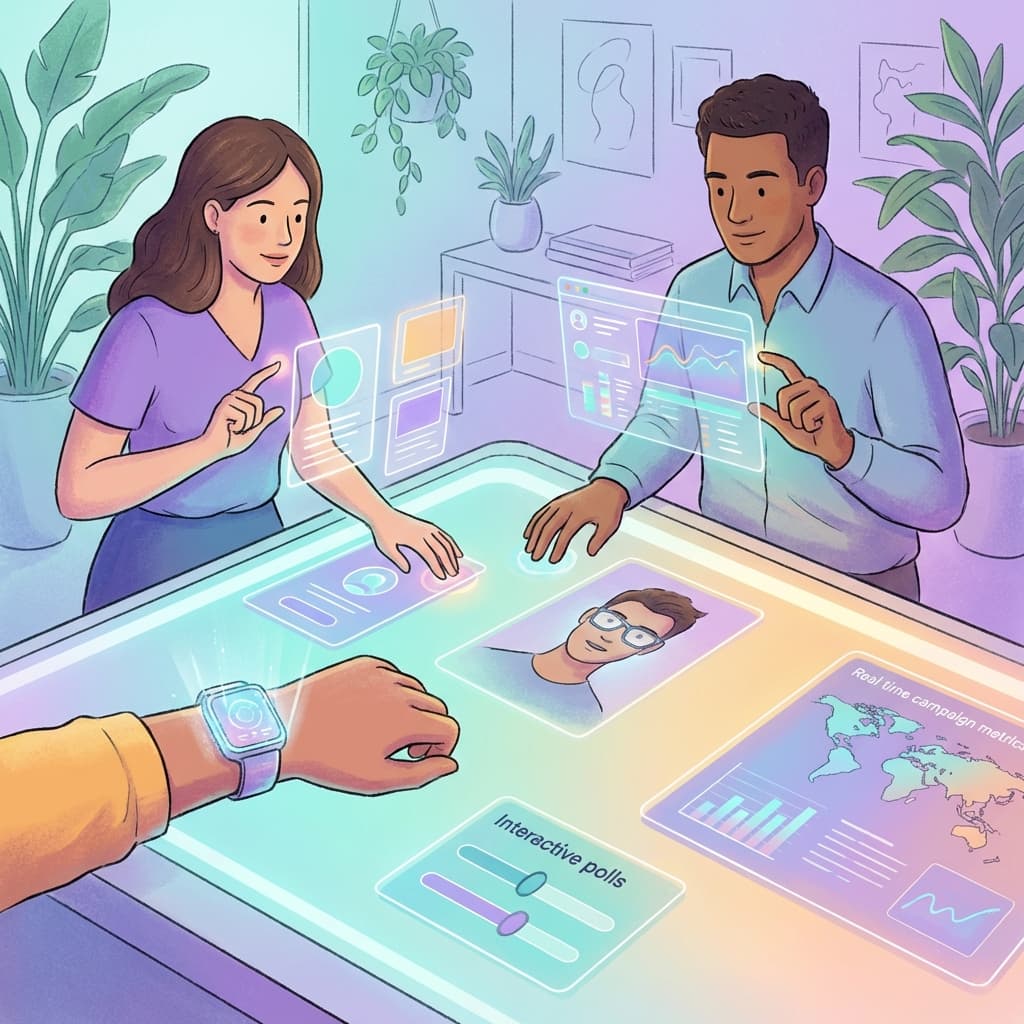
Launch ideas you can ship in a sprint:
- A "Which solution fits you?" quiz that pipes directly into your CRM segments and personalizes follow-ups automatically.
- Lightweight AR previews using WebXR — no app install required. Let buyers rotate, resize, or test-drive your product from their phone.
- Live data visualizations that respond when prospects adjust sliders. Perfect for ROI calculators, pricing estimators, or sustainability dashboards.
Interactive content does two things at once: it engages the prospect and it collects signal about what they actually want. That signal is more valuable than the engagement alone.
4. Trust, Data Privacy, and Sustainability Are Marketing Signals Now
Consumers now expect radical transparency around how their data is used — and they reward brands that show their work on sustainability. Between new privacy regulations and supplier disclosure rules, marketing needs its own trust infrastructure.
What to do now:
- Stand up zero- and first-party data programs that clearly state the value exchange: early access, personalized guidance, exclusive content. If the customer cannot explain what they get in return for their data, the program is not clear enough.
- Build privacy-by-design workflows with automated retention policies and human approval checkpoints for sensitive campaigns.
- Surface sustainability metrics in-line — energy saved, recycled materials, carbon offsets — so the message shows up where decisions happen, not buried in an annual report.
Trust is not a brand value you claim. It is an infrastructure you build. And in 2026, customers can tell the difference.
5. Action Plan for This Quarter
| Priority | What to Do Now |
|---|---|
| AI + ML | Connect campaign performance data into a governed AI workspace. Start with one pilot workflow — lifecycle emails or outbound scripts. |
| Voice & Multimodal | Add conversational FAQ blocks and long-tail schema markup to every new asset. Audit local and product feeds monthly. |
| Interactive Content | Ship one interactive asset this quarter, measure the engagement delta, and plug the winner into your evergreen funnel. |
| Trust & Sustainability | Publish a lightweight data and sustainability dashboard so customers can see exactly how you operate. |
6. KPIs Worth Watching
| Metric | Why It Matters | Target |
|---|---|---|
| Time-to-test new creative | Shows how quickly your team responds to market shifts. | Under 7 days from brief to live test |
| Campaigns with AI assistance | Reveals how embedded your AI copilots are in daily work. | 60%+ by year end |
| Voice/visual search contribution | Captures the new discovery channels before competitors do. | 10–15% of assisted conversions |
| Zero-party data opt-ins | Measures trust and your personalization runway. | 3× year-over-year growth |
7. What Is Coming Next
Visual search, on-device generative ads, and zero-party data exchanges are the next battlegrounds. The teams that already have clean data pipelines and AI change-management habits will adapt fastest when these arrive.
The pattern is consistent: the winners are not the ones who chase every trend. They are the ones who build the operational foundation — clean data, clear workflows, composable tooling — that lets them adopt new capabilities in weeks instead of quarters.
Ready to translate these trends into pipeline? Contact us and we will help you build a marketing system that compounds over time instead of decaying between campaigns.