
Data-Driven Decisions with AI: A Case Study
Every business says it wants to be data-driven.
Very few have the operating system to do it consistently.
Most teams are not short on data. They are short on clarity, alignment, and decision speed. Reports arrive too late, teams work from disconnected systems, and leadership gets activity metrics without always seeing the commercial signals that matter most.
This case study shows how one services business used AI and Agentic AI workflows to improve decision quality, response speed, and cross-team execution.
The Business Challenge
A mid-sized services company had solid lead volume and a healthy pipeline, but growth efficiency was slipping.
Data existed across:
- CRM records
- Website enquiries
- Paid media platforms
- Proposal pipeline tracking
- Sales call notes
- Customer feedback
The issue was not access. The issue was fragmentation.
As a result:
- High-intent leads were not always prioritised fast enough
- Marketing budget adjustments lagged channel performance
- Pipeline bottlenecks were identified after opportunities had cooled
- Leadership had numbers, but not enough real-time operational clarity
The business did not need another dashboard. It needed a faster decision system.
The Strategic Shift
The turning point came when leadership stopped asking, “What happened?” and started asking, “What should we do next?”
Key decision questions became:
- Which leads are most likely to convert right now?
- Which channels are generating volume but weak quality?
- Where are deals slowing down in the pipeline?
- Which customer signals require immediate action?
That reframed AI from a reporting tool into a decision engine.
The AI Workflow Implemented
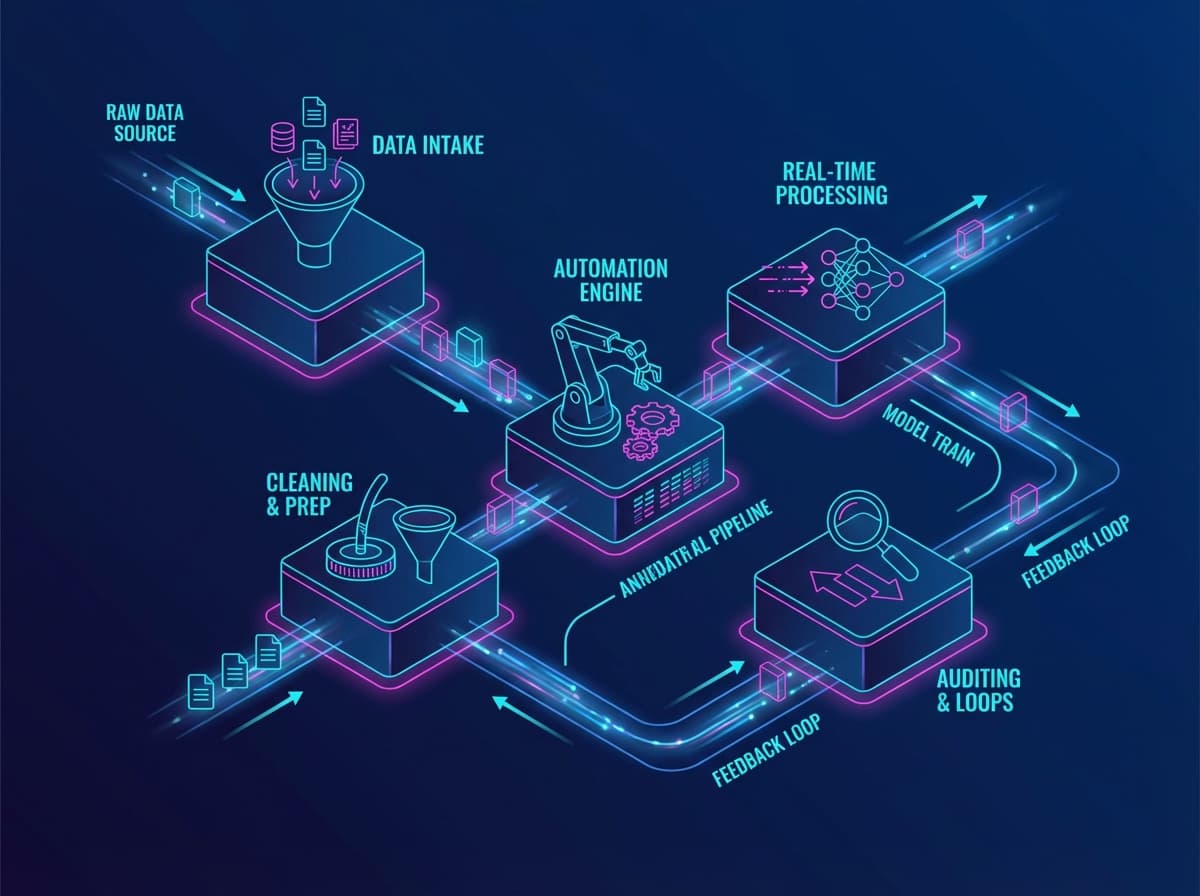
The business deployed an AI-driven decision support layer connecting sales, marketing, and pipeline data into one operating environment.
The system was built to:
- Consolidate lead, campaign, and sales activity into a unified view
- Score and prioritise inbound opportunities by fit and intent
- Detect pipeline drop-off points earlier
- Surface underperforming lead sources
- Recommend next-best actions for internal teams
This was not AI for optics. It was AI tied directly to commercial response quality.
Where Agentic AI Added Extra Leverage
Traditional analytics explains what happened.
Agentic AI helps teams act on what should happen next.
In this case, AI agents continuously monitored operational signals and triggered action when conditions changed.
Agents were used to:
- Track shifts in lead quality and enquiry patterns
- Detect high-value opportunities missing follow-up windows
- Flag campaigns driving low-quality pipeline activity
- Identify recurring sales objections across conversations
- Trigger internal prompts when thresholds were breached
Instead of waiting for weekly review cycles, teams responded while opportunities were still recoverable.
Outcomes Observed
Within a short period, the business improved both speed and confidence of day-to-day commercial decisions.
Notable improvements included:
- Faster response to high-intent leads
- Better marketing spend allocation
- Clearer visibility into pipeline friction
- Stronger alignment between leadership, marketing, and sales
- Higher confidence in prioritisation decisions
A less visible but critical win was internal alignment: less debate over inconsistent reports, and more execution around shared signals.
Why This Implementation Worked
1) The use case was tied to revenue and prioritisation
The team focused on commercially meaningful decisions, not generic AI experimentation.
2) The data layer matched real workflows
The system reflected how teams actually worked, which improved adoption and usefulness.
3) AI outputs were tied to action
Insights were only valuable if they changed what happened next.
4) Human accountability stayed in the loop
AI strengthened judgment and speed, but decision ownership remained with people.
Practical Takeaway for Other Businesses
If your organisation is already collecting data but still making slow or reactive decisions, the next step is not necessarily more BI tooling.
The next step is a better operational decision system.
When structured data, commercial context, and AI workflows are designed together, teams can:
- Respond faster to market changes
- Prioritise better-fit opportunities
- Reduce wasted effort
- Improve cross-functional alignment
- Make higher-confidence decisions under pressure
Final Thought
AI-driven decision-making is not valuable because it sounds advanced. It is valuable because it helps businesses act with more precision, speed, and confidence.
The companies that win with AI will not be the ones with the most dashboards. They will be the ones with the strongest decision systems.
If you want to build an AI-powered decision workflow for your team, contact Akonita and we’ll help you design a practical implementation roadmap.